richjc0967's pick · Updated July 2026
DEWALT Thickness Planer
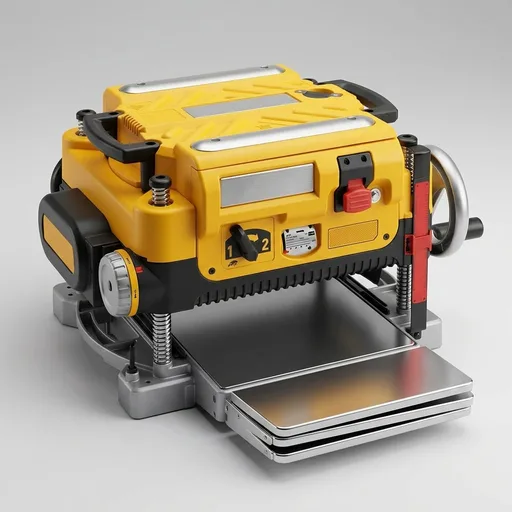

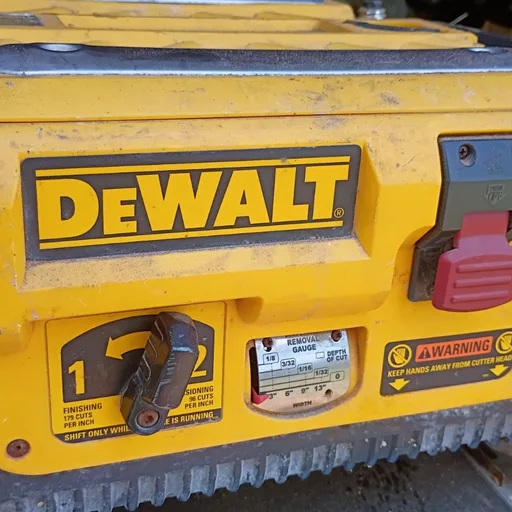
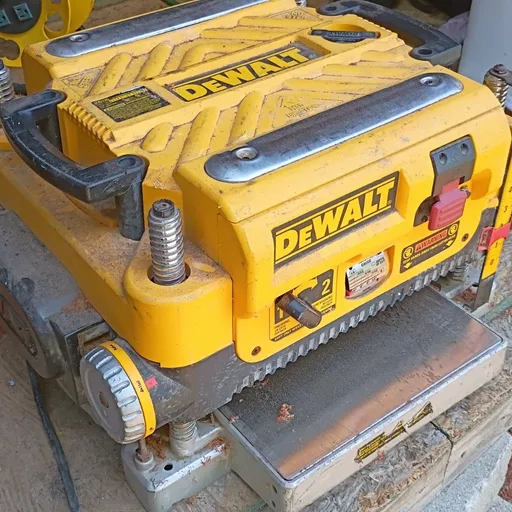
I keep this planer in the truck because it earns its space on more than one kind of job. Cabinets, interior trim, flooring repairs, and the odd piece of custom furniture all ask different things out of a tool like this, and this one handles the range without making me stop and babysit it. It is the kind of machine I would recommend to a working trim carpenter, a cabinet guy, or anyone who needs a planer that can move from one site to the next and still stay useful when the work changes.
What I like most is that it takes rough stock and gets it where I need it without a lot of drama. The cuts are consistent, the feed feels steady, and the two-speed setup gives me a little more control depending on what I am running through it. When I am smoothing boards for cabinet work, I want clean passes. When I am dealing with something less forgiving on a jobsite, I want the machine to stay predictable. That is where this one makes sense. It does not feel like a hobby tool pretending to be pro gear. It feels like something built for people who actually have to get material ready and get on with the day.
The size matters too. A 13-inch planer is a good middle ground for the kind of work I do. It is big enough to be useful on furniture parts and wide enough for most of the stock I run for cabinets, but it still fits the reality of moving around from site to site. I would not want something smaller, and I would not want to drag a bigger machine around unless I had a shop that stayed put. For the kind of work where the tool gets loaded up, hauled out, set down, and used again somewhere else, this size makes sense.
I also appreciate that it handles the repetitive stuff well. Flooring repairs, trim matching, the little bits that are not glamorous but have to be right, those are the jobs where a planer can either save you time or create more of it. This one saves time. It lets me bring material to the thickness I need instead of fighting with bad stock or wasting hours trying to make every piece match by hand. That is the real value for me. It is not just about what comes out of the machine. It is about how much cleaner the rest of the workday goes once the material is right.
Who this is for is pretty specific. If you work in cabinets, finish carpentry, flooring, or small-scale furniture work and you need one planer that can live in a moving truck, this makes sense. If you only plane boards once in a while in a garage, it is probably more machine than you need. This is for somebody who uses a planer as part of the actual workflow, not as a special occasion tool.
The one thing I would call out is the weight and bulk. It is not a featherweight machine, and if you are hauling tools up stairs or in and out of tight spaces all day, you notice that. That is not a knock on the performance. It is just the reality of a serious planer with real capacity. I would rather carry something solid than something flimsy, but it is still something you feel at the end of a long day.
I started wanting a planer that could keep up with cabinet work, and what I ended up valuing most was how it fits into the rest of the job. It saves me from reworking material, it keeps the pace up, and it does not act fussy when the work shifts from one project to the next. If your days look anything like mine, with a mix of trim, repairs, cabinets, and the occasional custom piece, this is a good machine to have with you.
Amazon product links on this guide are not currently affiliate links. Neither richjc0967 nor Buyer Field Guide earns an affiliate commission from them.
See current price